What "Programming" a Key Fob Actually Means
Programming is the process of teaching your car to recognize a new fob or remote as one of its own. Every key fob and most modern keys carry a tiny chip with a unique electronic code. Your car's onboard computer (often called the BCM, body control module, or an immobilizer module) keeps a list of the codes it trusts. Until your new fob's code is written into that list, the car treats it as a stranger and ignores it, even if the buttons click and the cut metal blade physically fits the lock.
There are two related jobs that often get bundled together but are technically separate. Remote programming pairs the lock, unlock, and trunk buttons so the fob can send those wireless commands. Transponder or immobilizer programming registers the chip that the car checks before it will allow the engine to start. A key can be cut to fit perfectly and still fail to start the car if the transponder side was never programmed, which surprises a lot of drivers.
How the Programming Process Works Step by Step
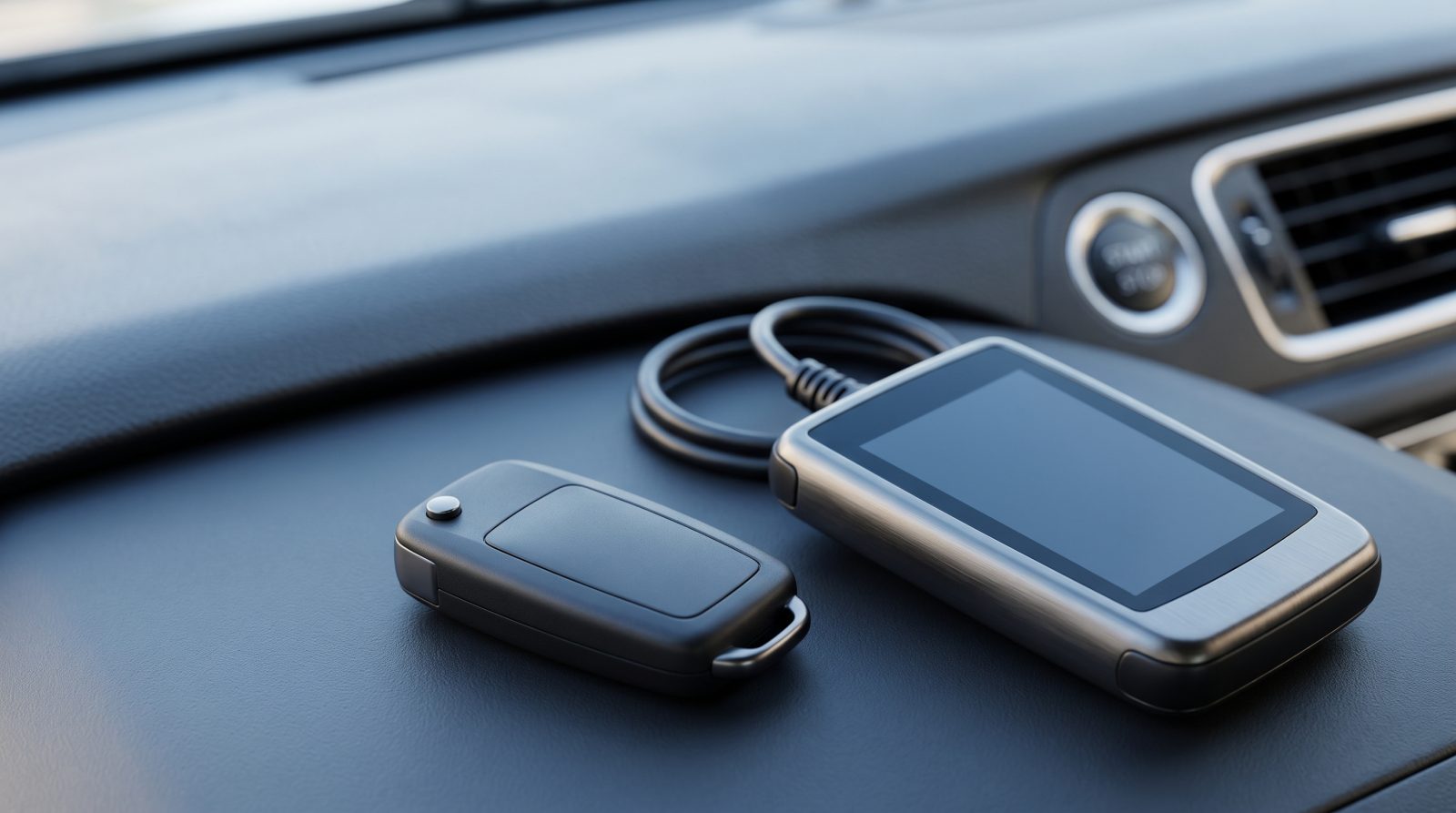
For most vehicles built in the last two decades, programming is done electronically through the car's diagnostic port (the OBD-II port, usually under the dashboard on the driver's side). A locksmith connects a programming tool, the tool communicates with the immobilizer system, and the new fob's code is added to the car's approved list. Depending on the make and model, the existing keys may also be re-synced so everything works together.
The general sequence looks like this on most cars:
- Identify the exact year, make, model, and the type of key the vehicle uses, since systems vary widely between manufacturers
- Source a compatible blank fob with the correct chip and radio frequency for that vehicle
- Cut the mechanical blade (if the key has one) to match the door and ignition
- Connect a programming tool to the OBD-II port and enter the immobilizer system
- Write the new fob's electronic ID into the car's memory and confirm the remote buttons respond
- Test starting the engine and using all buttons before the job is considered finished
Why Some Fobs Are Harder to Program Than Others
Not all keys are created equal, and the difference affects how programming is done. Older basic remotes sometimes use a manufacturer "on-board" sequence that can be entered from inside the car. Most newer vehicles, however, use rolling encryption and secured immobilizer data that require professional programming equipment and, in some cases, a security code tied to the vehicle.
Proximity or push-to-start "smart" keys add another layer. Instead of pressing a button, these fobs talk to the car automatically when they are nearby, which means the car and fob are constantly verifying each other with encrypted signals. Programming a smart key involves pairing that secure two-way relationship, not just copying a code. Because the requirements differ so much, the single most useful thing you can do before service is gather your vehicle's year, make, model, and a clear description of your current key.
What You'll Need and How to Prepare
A little preparation makes fob programming faster and smoother. The most important item is proof that the vehicle is yours, because adding a new key to a car's immobilizer is a security-sensitive task. Auto Locksmith San Francisco requires proof of ownership before service.
To get ready for a key fob or remote programming visit, have these on hand:
- Proof of ownership for the vehicle (such as the title or registration)
- The vehicle's exact year, make, and model
- Any working keys or fobs you currently have, since some programming steps go faster with an existing key
- Whether you still have all keys or have lost every key, as the two situations are handled differently
When to Call a Mobile Auto Locksmith
Because programming for most modern vehicles needs the right blank fob, key cutting, and a programming tool that can speak to your car's immobilizer, it's usually not a do-it-yourself job. A mobile auto locksmith brings the equipment to your location, which is helpful when you have a non-working spare, a lost fob, or a key that unlocks the doors but won't start the engine.
Auto Locksmith San Francisco is a mobile auto locksmith that comes to you, serving San Francisco along with Oakland, Hayward, San Mateo, Fremont, and San Jose. The team handles car key replacement, emergency car lockouts, and key fob and transponder programming. If you need a new fob programmed, a replacement key made, or help getting back into your vehicle, call (415) 943-3009 and have your vehicle details and proof of ownership ready so the visit goes as smoothly as possible.
A locksmith with the right programming equipment can pair fobs and remotes for many makes and models. A mobile auto locksmith can do this at your location, which is convenient when the car won't start or you're locked out. Have your vehicle's year, make, and model plus proof of ownership ready when you call.
That usually means the remote side of the fob is working but the transponder chip hasn't been programmed to the car's immobilizer, or the chip isn't being recognized. The fix is to register the key's electronic code with the vehicle so the engine will start, which is a standard part of key fob and transponder programming.
Yes, losing every key is a different situation than having a spare, but a replacement fob can typically still be made and programmed. Because adding a key to a car's security system is sensitive, proof of ownership is required before service. Call (415) 943-3009 with your vehicle details to get started.
Need an auto locksmith now: (415) 943-3009
Have your location, vehicle year, make, model, key type if known, and proof of ownership ready.